
Deep Work Schedule Examples for Real Jobs, Not Monks
Four deep work schedules for people with meetings, kids and inboxes, from one protected hour a day to full deep days. Pick the one that fits the job you actually have.

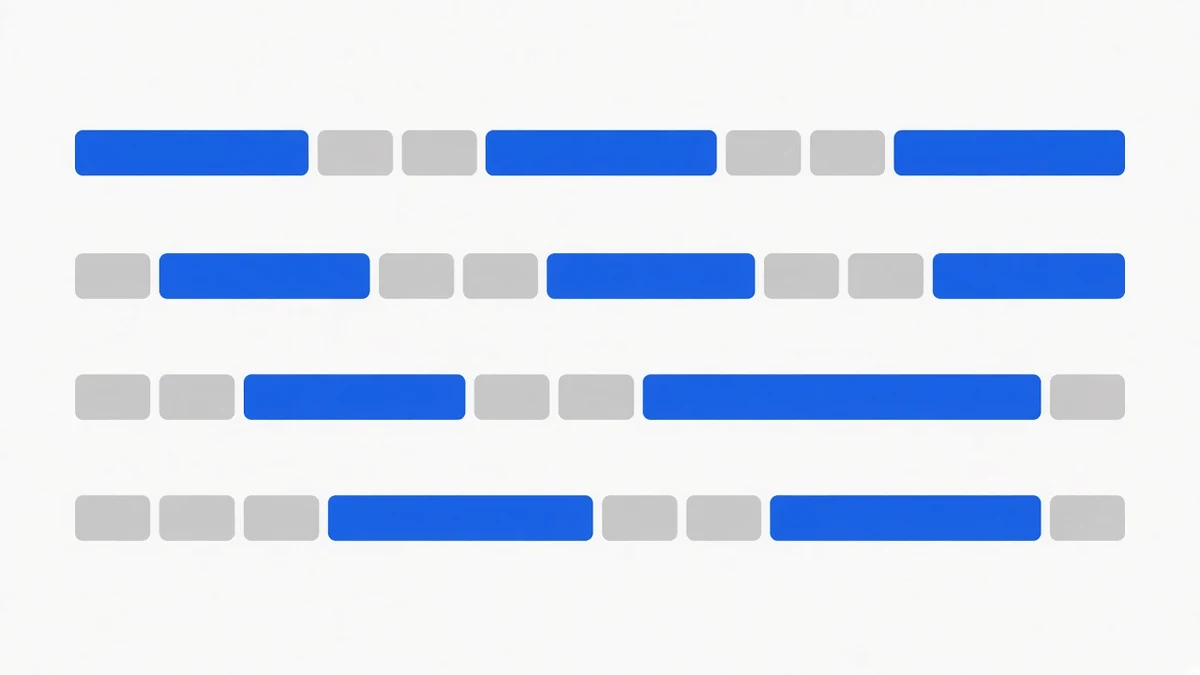
Start with one protected 90-minute block a day, at the same time, with notifications off and one task chosen in advance. That is a deep work schedule most people can keep. From there, you can grow it into two blocks, or a full deep day each week, depending on what your job allows. Below are four example schedules for four kinds of job.
What counts as deep work
The term comes from Cal Newport's book Deep Work, which defines it as focused, distraction-free effort that pushes your skills and creates real value. The opposite is shallow work: email, scheduling, quick replies, the stuff that can be done while distracted.
A quick test for whether a task is deep: would a smart new hire need months of training to do it well? If yes, it is deep. If they could do it next week, it is shallow. Writing the strategy is deep. Formatting the slides is shallow.
How many hours of deep work per day?
Fewer than you think. Newport has suggested that around four hours a day is near the limit for most people, and many people find that one to three hours of real focus is a strong day. Do not plan eight hours of deep work. You will fail, feel bad, and quit.
Four example schedules
1. The meeting-heavy manager: one daily block
| Time | Activity |
|---|---|
| 8:30 to 10:00 | Deep block: one task, chosen the day before |
| 10:00 to 10:30 | Email and messages |
| 10:30 to 17:00 | Meetings, one-to-ones, reactive work |
| 17:00 to 17:15 | Shutdown and pick tomorrow's deep task |
One block, every day, before the calendar fills. It adds up to over seven hours a week of real thinking.
2. The individual contributor: two daily blocks
| Time | Activity |
|---|---|
| 9:00 to 11:00 | Deep block 1 |
| 11:00 to 12:00 | Email, standup, quick tasks |
| 13:00 to 14:30 | Meetings window |
| 14:30 to 16:30 | Deep block 2 |
| 16:30 to 17:30 | Shallow work and wrap-up |
Ask your team to keep meetings to one window. It is a common request and often welcome.
3. The parent working from home: split blocks
| Time | Activity |
|---|---|
| 6:00 to 7:00 | Deep block before the house wakes up |
| 9:15 to 11:15 | Deep block after school drop-off |
| Afternoon | Meetings, admin, pickup |
Shorter blocks, placed around fixed family times.
4. The rhythmic deep day
| Day | Mode |
|---|---|
| Monday to Thursday | Normal days with one 90-minute block |
| Friday | Full deep day, no meetings, email twice |
Good for writers, researchers and engineers with a team that allows it.
How to protect the block
- Book it as a meeting. Give it a name like "Writing: proposal" so it does not look free.
- Pick the task the day before. Ten minutes lost choosing is ten minutes of deep time gone. The workday shutdown ritual is the right moment.
- Turn off notifications. Close email and chat. Most tools can pause notifications on a schedule.
- Have a capture pad. When a stray thought pops up ("I must reply to Sam"), write it down and keep going.
Interruptions are costly. Gloria Mark and colleagues found in a study that people compensated for interruptions by working faster, but at the price of more stress and frustration. A protected block saves you that tax.
Deep work vs shallow work in your plan
Shallow work is not bad. It is necessary. The trick is giving it its own time so it does not leak into deep blocks. Batch email into two or three slots. Group small tasks into one hour. We explain how blocks and limits fit together in time blocking vs time boxing.
A worked example week
A composite example: Sam is a product designer with about 12 hours of meetings a week.
- Mon to Thu, 9:00 to 10:30: deep block on the new checkout flow.
- Wed, 14:00 to 16:00: second block for user research synthesis.
- Fri: meetings-free morning for a full redesign pass.
Total: about 11 hours of deep work. Before the plan, Sam guessed he did "a few hours" and could not say when.
The limitations
Some jobs have almost no deep work in them, and that is fine. Customer support, operations and many management roles are mostly reactive by design. In those jobs, aim for one smaller block a few times a week, and do not judge yourself against a novelist's schedule.
Deep work is also tiring. If you are doing two blocks a day and the second one is mush, cut back.
Choosing your deep task
A protected block is only useful if the right task goes in it. Before each block, ask three questions:
- Does this task need my full attention to be done well?
- Will it matter in a month?
- Can it make real progress in the time I have?
If the answer to all three is yes, it belongs in the block. If not, it is shallow work and can wait for the afternoon. Good candidates are writing, analysis, design, planning and learning a hard skill. Poor candidates are inbox tidying, scheduling and quick edits.
What to do when a block goes badly
Some blocks will be foggy. You will stare at the screen and get little done. That is normal, not a sign the schedule is wrong. Two tips help: stay in the block anyway, even working slowly, because leaving trains you to leave; and note what was different that day, like sleep, a late night or a heavy meeting before. Patterns show up quickly.
Deep work vs shallow work: a quick sort
When you are not sure where a task belongs, this table helps.
| Deep | Shallow |
|---|---|
| Writing a proposal from scratch | Fixing typos in a proposal |
| Designing a new feature | Updating ticket statuses |
| Analysing what the data means | Exporting the data |
| Planning next quarter | Booking the planning meeting |
| Learning a hard new tool | Watching a short update video |
Notice that each shallow task is often connected to a deep one. That is fine. Just do them at different times. A deep block spent formatting is a deep block wasted, and protecting focus time only pays off if the right work goes into it. Cal Newport's book argues that this kind of work is becoming more valuable and rarer at the same time, which is a good reason to guard it even in a busy job.
Telling your team about the schedule
A deep work schedule works best when the people around you know about it. Tell your team which hours you protect and how to reach you if something is truly urgent, for example a phone call rather than chat. Most colleagues respect a clear rule far more than an unexplained silence. If your manager is unsure, offer a two-week trial and share what you finished in that time. Results tend to settle the question quickly.
Try it this week
Pick schedule 1. Block 90 minutes, tomorrow morning, for one task you have been putting off. Choose the task tonight. If you use Todonado, add it as the first item of the day so it is waiting when you sit down. If procrastination is what usually eats your mornings, start with that piece first.