
Body Doubling for ADHD: What It Is and How to Try It
Body doubling means working alongside someone else so starting and staying on task gets easier. Why people with ADHD use it, the forms it takes, and how to set one up today.

Body doubling means doing a task while another person is present, in the room or on a video call, even if they are doing something completely different. For many people with ADHD, having someone there makes it far easier to start a task and stick with it. To try it, ask a friend to join a call for one hour, each of you say what you will work on, then get on with it.
What body doubling is
The term is informal. It is not a clinical treatment, and the research on it is thin; most of what we know comes from lived experience, coaches and community. The Wikipedia entry on body doubling gives a short overview. The idea is old, though. Libraries, study halls and shared offices have always worked partly this way.
The "double" does not help with the task. They are not a coach or a supervisor. They are just there.
Why it seems to help
Nobody knows exactly, but people describe a few effects:
- A gentle sense of being seen. It is harder to drift to your phone when someone is nearby, even if they are not watching.
- A shared start time. "We start at 10:00" turns a vague intention into an event.
- Company for boring tasks. Chores feel less lonely, so less heavy.
- A clear end. The session finishes when the call ends, which helps with time blindness.
Four forms of body doubling
| Form | Cost | Effort to set up | Best for |
|---|---|---|---|
| A friend in the room | Free | Low | Chores, admin, paperwork |
| A friend on a video call | Free | Low | Work tasks, emails, study |
| Online coworking sessions | Free to paid | Very low | Daily focus, when friends are busy |
| A café or library | Coffee | Medium | Writing, reading, deep work |
A friend in the room
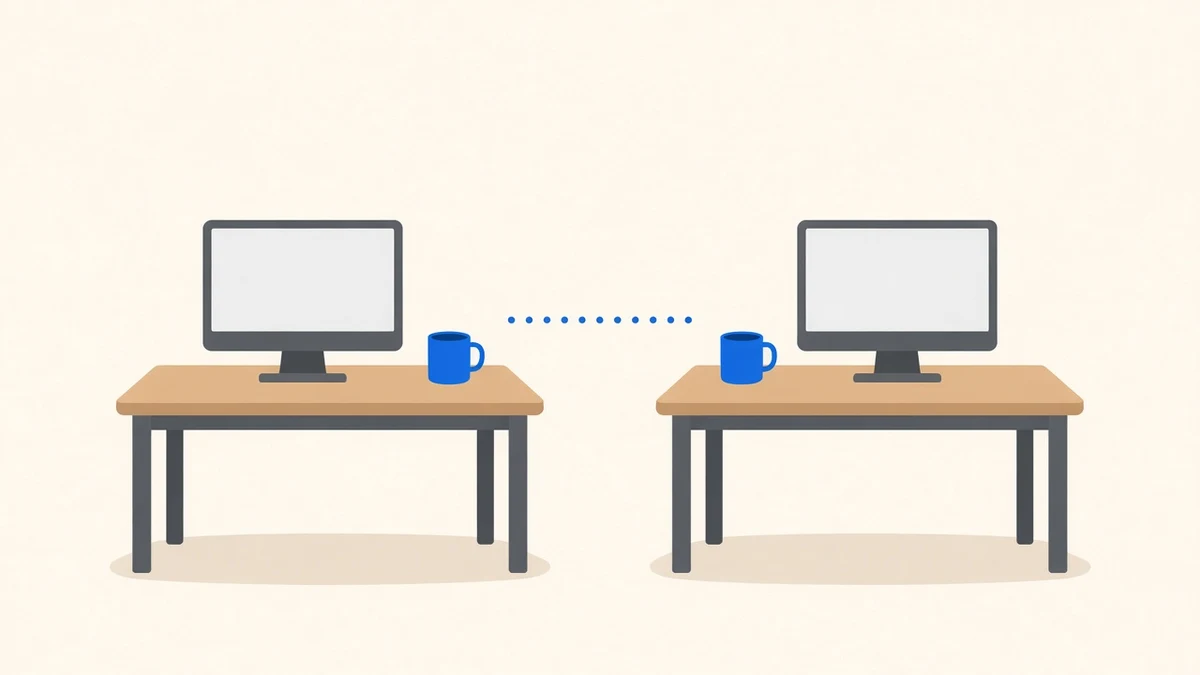
The simplest version. Your partner reads while you finally sort the post. Your flatmate works on their laptop at the same table. You do not need to talk.
A friend on a video call
Ideal when you live alone. Turn cameras on, mute if you like, say your goals at the start. Some people keep these calls running for hours.
Online coworking sessions
There are services built for this, where you book a session and get paired with a stranger or join a group room. Some are free, some charge a monthly fee. It is worth trying one if friends are rarely free, but compare prices and privacy terms first.
A café or library
The background hum of other people working can do the same job. It is less personal, but always available.
How to run your first session
- Pick the task. One task, or a short list of small ones. Write it down.
- Pick the person and the time. One hour is a good first length.
- Open with goals. "I'm going to do my expenses and reply to the school." Say it out loud.
- Work. Cameras on, mics optional. No chatting unless you agreed to.
- Close with a check. "Got the expenses done, school email is drafted." Celebrate it a little.
The opening and closing lines are what make it work. Saying a goal to someone is a small promise, and reporting back closes the loop.
A worked example
Here is a composite example. Saturday, 10:00. Lena has avoided her tax paperwork for a month. She asks a friend to join a video call.
- 10:00: "I'm going to find all my receipts and put them in one folder." Friend: "I'm doing my CV."
- 10:05 to 10:50: both work. Lena finds most receipts and sorts them into months.
- 10:50: "Folder done, two months missing. I'll email the bank Monday." Friend: "Rewrote my summary."
She did 45 minutes on something that had sat for 30 days. The friend did not help with taxes at all.
When body doubling doesn't help
Some people find another person distracting, especially if they tend to chat. If that is you, try a library rather than a friend. It also does not fix a task that is unclear. If you don't know what the first step is, write it before the session, or use a brain dump to sort your thoughts. And if starting is the main problem, pair the session with the small starts in our task paralysis guide.
Questions about body doubling
Do I need someone with ADHD as my double?
No. Your double can be anyone who is willing to sit and do their own thing. Some people prefer a fellow ADHD friend because there is no need to explain, but it is not required.
Can I body double with a video or a livestream?
Many people use "study with me" or "work with me" videos, where someone works on camera for an hour or more. It is not quite the same as a real person who knows you are there, but it helps a lot of people and costs nothing.
Is it weird to ask a friend?
Less weird than you think. Many people are glad of company for their own boring tasks. Frame it as mutual: "Want to do a work call tomorrow? I'll do my emails, you do whatever you need." Most friends say yes.
Body doubling for chores at home
Many people use body doubling mostly for housework, because chores are where ADHD avoidance bites hardest. Laundry, dishes, sorting the post and tidying a room are boring, have no deadline and are easy to put off forever.
A few setups that work well:
- Phone call while tidying. Call a friend who is also doing chores. Talk or don't. Agree on 30 minutes.
- Same-room chores. You fold laundry while your partner cooks. Neither helps the other, but both get done.
- Online room for cleaning. Some virtual coworking sessions are just for chores. Cameras pointed at the room, not the face, if you prefer.
The meaning of body doubling stays the same at home: someone else is present, you say what you will do, and you report back at the end. Keep the task list short and concrete, like "empty the dishwasher, clear the table, take out recycling", so you are not deciding what to do once the session has started.
Making it a routine
Many people book a regular slot: two sessions a week with the same friend, same time. The regularity matters more than the length. Put the tasks for each session on your plan beforehand, in Todonado or on paper, so you do not spend the first ten minutes deciding.
It sounds too simple to matter. Try one hour this week and see what gets done.