ADHD Task Paralysis: Why You Freeze and How to Get Moving
Task paralysis is not laziness. A plain explanation of why ADHD brains stall at the start line, and a ladder of moves to try, from the smallest to the strongest.

Start smaller than feels reasonable. When ADHD task paralysis hits, the fix is almost never more willpower. It is a first step so small that your brain stops treating it as a decision: open the file, put one plate in the sink, type the email subject line. Then give yourself permission to stop after two minutes.
That advice sounds too simple, so it helps to understand why it works.
What task paralysis is
Task paralysis is the state of knowing a task matters, often wanting to do it, and still not being able to begin. People describe it as being frozen, or as watching themselves not start. Hours can pass in it.
It is closely tied to what clinicians call executive function: the set of mental skills that handle planning, starting, switching and holding things in mind. ADHD affects those skills, which is why difficulty organizing and starting tasks shows up in descriptions of adult ADHD from sources like the NHS. Not everyone who freezes has ADHD, and you do not need a diagnosis to use anything below.
Task paralysis vs executive dysfunction
People search this pairing a lot. The short answer: executive dysfunction is the broad difficulty, and task paralysis is one of the ways it shows up. Trouble starting, sometimes called a problem with task initiation, is one symptom. Losing track of time, forgetting steps, and struggling to switch tasks are others.
| What it feels like | What usually helps | |
|---|---|---|
| Task paralysis | Wanting to start and not being able to | Shrinking the first step, outside structure |
| Procrastination | Choosing something nicer instead | Lowering the emotional cost of the task |
| Burnout | No fuel for anything, even fun things | Rest, fewer commitments, often support |
If what you feel is closer to burnout, the ladder below will not do much. Rest first.
Why the freeze happens
Three things tend to stack up.
The task is fuzzy. "Sort out taxes" has no first move. Your brain has to plan before it can act, and planning is the very skill under strain.
Too many choices. A list of fifteen items asks you to pick one. Each option pulls a little, so none wins. Psychologists call the cost of choosing decision fatigue; you call it staring at the list.
The feeling attached to it. If the task has a history of going badly, starting means walking into that feeling. Avoiding it gives instant relief, and relief is a strong reward.
A ladder of starting moves
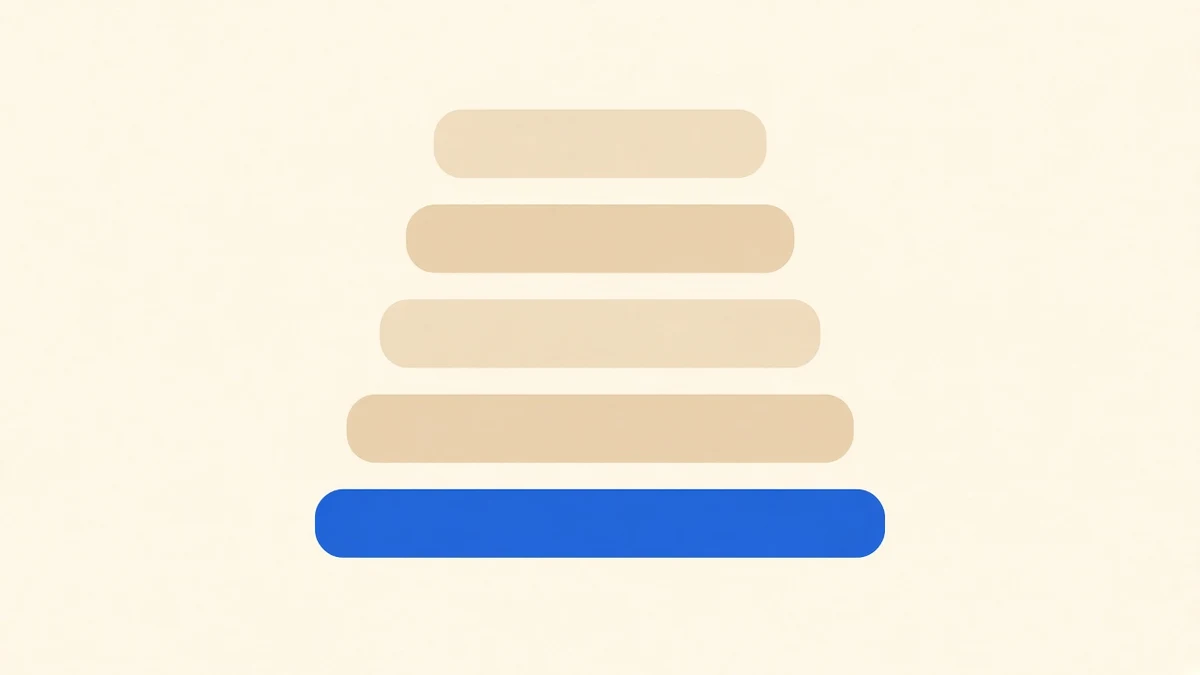
Try the lowest rung first. Climb only if it does not work.
- Name the first physical action. Not "do taxes" but "find last year's tax PDF". Write it on a sticky note.
- Two-minute permission. Set a timer for two minutes and agree that stopping at the bell is a full success. Most of the time you keep going. Sometimes you do not, and that is fine.
- Change the setting. Stand up, move rooms, put on one specific playlist. A change of place works as a reset signal.
- Borrow another person. Work next to someone, in person or on a video call, even if they are doing something else. This is called body doubling, and many people with ADHD say it is the strongest rung.
- Make it someone else's deadline. Tell a friend you will send a photo of the first page by 3 pm. Outside stakes do what inside motivation cannot.
Worked example: the email you have avoided for nine days
Say there is an email to a landlord about a repair. It has sat on your list for nine days.
- Rung 1: the first action is "open a new email and type the landlord's address". That takes ten seconds.
- Rung 2: timer for two minutes. Write one sentence: "The bathroom tap is still leaking." Stop if you want.
- If you are still frozen, rung 4: message a friend, "can you stay on a call while I write one email?"
Notice what the ladder does not do. It never asks you to feel motivated. It just keeps cutting the cost of the next move until it is lower than the cost of avoiding it.
Setting up your day so freezes happen less
You cannot prevent every freeze, but you can make them rarer.
- Keep tomorrow's list short. Three real tasks beats fifteen maybes. See how to plan a realistic day for a way to size it.
- Write first steps when you are calm. At the end of the day, add the first physical action next to each task for tomorrow. Future you will not have to plan before acting.
- Dump the mental noise. Unwritten worries compete for attention. A quick brain dump turned into an action plan clears room.
- Put one easy win first. A tiny finished task in the morning gets the engine turning.
A planning app can help with the second point. Todonado lets you keep a short day list apart from the big backlog, which takes the fifteen-item choice off the table. A paper card does the same job.
When it is more than a bad afternoon
If freezes are taking over weeks at a time, or you are not sleeping, eating or getting basic things done, talk to a doctor. The tips here are for daily friction, not for a crisis, and they cannot replace an assessment or treatment.
Questions people ask about task paralysis
Is task paralysis a symptom of anxiety or depression too?
It can be. People with anxiety often freeze because the task feels risky, and people with depression often freeze because nothing feels worth the effort. The ladder above can still help with a single task, but if the freeze is everywhere and lasts for weeks, that is a reason to talk to a professional rather than to try harder.
Why can I do other people's tasks but not my own?
Outside deadlines and other people's expectations act as structure. Your own tasks have none, so they rely on an inner push that is often weakest exactly when you need it. That is why rung 5, making it someone else's deadline, works so well.
Does medication help?
For some people with diagnosed ADHD, treatment makes starting much easier. That is a conversation for a doctor, not a blog. The strategies here work with or without it.
The one thing to remember
The freeze is a starting problem, not a character problem. You do not need to finish. You need to begin, and beginning can be made very, very small. If you have a pile of tasks that has been waiting for years, this guide to old unfinished lists is a gentle next read.